The selection process for the next UN Secretary-General is about to reach a decisive phase with seven candidates, four of whom are women, running for the top position. The final stretch of the process will reveal whether openness will prevail over possible backroom deals involving the permanent members of the Security Council.
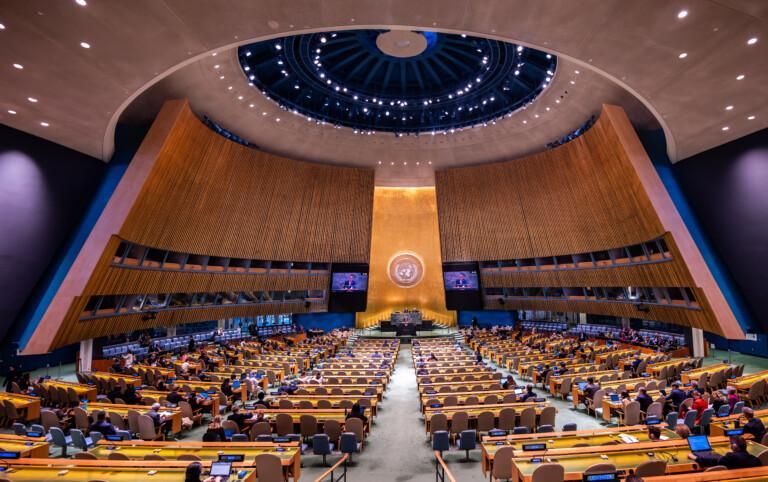
UN member states are set to select a new Secretary-General (UNSG) later this year as António Guterres’ second term comes to an end. The selection takes place amid widespread cost-cutting and reform within the world organization, multiple global challenges, and a tense geopolitical setting. While the search for a competent and diplomatic UN leader is always in the global spotlight, the importance of the next UNSG cannot be overstated. The UN needs an effective Secretary-General who can navigate geopolitical pitfalls and maintain the relevance of the organization.
Under Article 97 of the UN Charter, the UN General Assembly appoints the Secretary-General upon the recommendation of the Security Council. The selection procedure gives the five permanent members of the Security Council (P5) – China, France, Russia, the United Kingdom, and the United States – a decisive role despite recent efforts to increase the transparency and inclusivity of the process.
A procedure for nomination was introduced in 2015, and candidates are required to submit a vision statement along with their CV and a financial disclosure. Candidates also appear before the General Assembly and take questions during an interactive dialogue. After this, the Security Council holds informal hearings and eventually proceeds to so-called straw polling – a way to clarify, through an informal and secret ballot, which candidates enjoy support and which do not. If one of the P5 member states ‘discourages’ a candidate, this will effectively block that candidate’s selection.
The current selection round formally started in November 2025, with a joint letter from the presidents of both the General Assembly and the Security Council inviting member states or groups of member states to nominate candidates. The letter states that candidates should “have proven leadership and managerial abilities, extensive experience in international relations and strong diplomatic, communication and multilingual skills”. It also encourages member states to consider nominating women. Unofficially, if geographical rotation were followed, the next UNSG would be expected to come from the Latin American and Caribbean Group – one of the five official regional groups whose purpose is to ensure regional diversity in UN representation.
So far, seven candidates have been put forward in the race to become the next UNSG:
1) Michelle Bachelet Jeria, nominated by Chile, Brazil and Mexico (Chile later withdrew its nomination);
2) María Fernanda Espinosa Garcés, nominated by Antigua and Barbuda;
3) Rafael Mariano Grossi, nominated by Argentina;
4) Rebeca Grynspan Mayufis, nominated by Costa Rica;
5) Carolyn Rodrigues-Birkett, nominated by Guyana;
6) Macky Sall, nominated by Burundi; and
7) Olara Otunnu, nominated by Uganda.
The Maldives also nominated Virginia Gamba, but her candidacy was withdrawn after a few weeks. Otunnu, who was only nominated as a candidate on 24 July, is the only candidate who has not yet participated in any hearings or undergone the scrutiny conducted in April with the General Assembly and in June–July with the Security Council.
Most of the candidates have a background in the UN system. Bachelet, the former UN High Commissioner for Human Rights and former president of Chile, is well known and among the candidates with the greatest political weight. Her chances may nevertheless be hindered by opposition among US Republicans to her support for abortion rights and by China’s concerns about her human rights profile. Grossi has served as Director General of the International Atomic Energy Agency (IAEA) since 2019, Grynspan is Secretary-General of the UN Conference on Trade and Development (UNCTAD), and Espinosa served as President of the UN General Assembly from 2018 to 2019. Rodrigues-Birkett is Guyana’s Permanent Representative to the UN. The latecomer to the race, the Ugandan diplomat Otunnu, was highly influential at the UN, but decades ago.
Experience in multilateral diplomacy or at the UN does not guarantee victory in the race. Over the decades, the selection process has been characterized by backroom deals and intense lobbying, not to mention the emergence of dark horses. For example, a recent report published by the civil society organization 1 for 8 Billion shows that political support for a candidate has commonly been traded for senior UN positions. Thus, it remains uncertain who will eventually enjoy the political backing of the required nine Security Council members, including the P5, and on what grounds. Moreover, only four out of seven candidates – Grossi, Grynspan, Rodrigues-Birkett, and Otunnu – enjoy the support of their own national governments, a factor that has to date proved decisive in previous selection processes.
The Security Council’s straw polling, which began on 30 July, did not immediately reveal a clear favourite. Grynspan received ten positive votes and one against, followed by Rodrigues-Birkett with nine in favour and two against, and Grossi with seven favourable votes and two against. The resistance to Bachelet, Sall and Otunnu seems insurmountable. But as long as the straw polling does not distinguish between votes cast by the permanent members and those cast by the ten elected members, the results are indicative at best.
With two women in the lead in the straw polling, there is hope among civil society organizations such as 1 for 8 Billion that are lobbying hard for a female Secretary-General. The pressure to finally break the glass ceiling is mounting. While Grynspan is held to represent continuity rather than change, Rodrigues-Birkett is said to be picking up support in the UN General Assembly. However, it remains an open question whether any last-minute candidates will appear, thereby undermining efforts to increase transparency and inclusivity in the selection process for the world’s most impossible job.