
Russia’s war against Ukraine has led to a fundamental rethinking of EU foreign policy, including enlargement, security and defense, and energy policy. The nature and depth of the shift, as well as the agency driving it, remain largely unexplored. Drawing on role theory, this article examines the agency of member states in shaping the policy shift in a co-constitutive process of resolving role conflicts and adjusting roles. Based on original interview data and document analysis, it finds that role changes – such as abandoning opposition to enlargement, renouncing the energy partnership with Russia, and the military turn – remain contested and context-specific, limiting the policy outcomes. While the enlargement pledge appears irreversible, the role changes are not sufficient for enlargement to materialize. In EU security policy, role adjustments are even more limited but have already produced policy outcomes. Finally, in energy policy, decoupling has not been fully achieved, despite fundamental role changes.
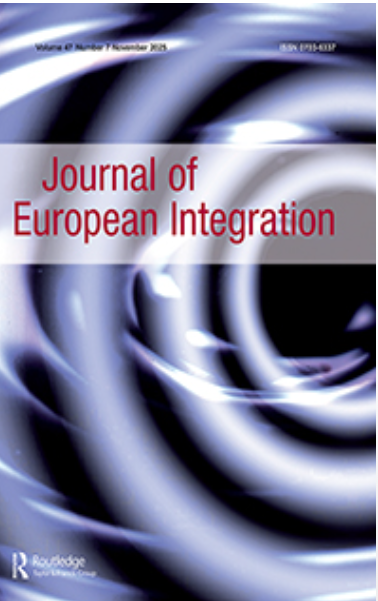
From role change to policy change: EU member states and change in EU foreign policy after Russia’s invasion of Ukraine
Journal of European integration: 1–21. Routledge.

Tyyne Karjalainen
Forskare

Marco Siddi
Ledande forskare
Du kan också vara intresserad

Referentgranskade vetenskapliga artiklar
”Innovatiivisten” peesissä – Suomen maahanmuuttopoliittinen vaikuttaminen Euroopan unionissa vuoden 2024 eurovaalien jälkeen



Hanna Ojanen
Maria Rossi
Antti Seppo