
This article provides novel insights into Russia’s strategic use of migrants, using the Federal Security Service (FSB)-enabled migration flows towards Norway and Finland in 2015/16 as a case study. Through the use of semi-structured interviews and an empirical study, we identify several potential Russian goals tied to its use of migration, including restoring bilateral relations to the levels before Russia’s 2014 invasion of Ukraine, influencing the European Union’s (EU’s) decisions on sanctions and cooperation, warning Finland against seeking NATO membership, testing the effectiveness of a new tool, collecting intelligence, and weakening Western influence per Russia’s broader information confrontation towards the West. These objectives served the broader regional and grand strategic goals of maximising Russia’s influence and minimising the EU’s and NATO’s sway in the region. Our findings challenge earlier interpretations that downplayed Russia’s role, arguing instead that the operation established coercive potential rather than immediate concessions. We contribute to the literature on the strategic use of migration and authoritarian states’ innovative use of unconventional methods.

Implementing a new tool: Russia’s strategic use of migrants towards Norway and Finland 2015/16
European journal of international security: 1–24. Cambridge University Press.
EU
Krig och konflikter
Krishantering
Migration och flyktingar
Nato
Finland
Nordiska länderna och Baltien
Ryssland

Jyri Lavikainen
Forskare
Du kan också vara intresserad

Referentgranskade vetenskapliga artiklar
Sinikukka Saari vastaa Korhosen ja Reynoldsin kritiikkiin

FIIA Research Paper
The EU’s need for a new growth model: Innovation under strategic capitalism

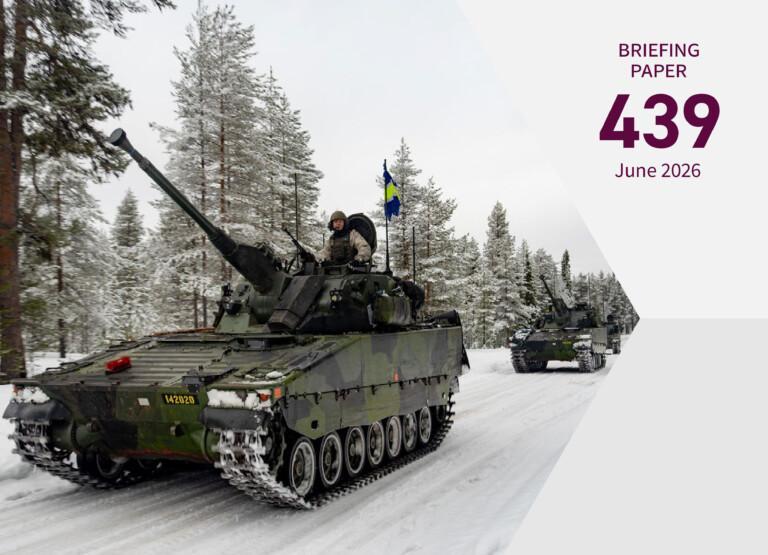
FIIA Briefing Paper
NATO’s Forward Land Forces in Finland: Defending the northeastern frontline


Jakob Gustafsson
Anna Savolainen