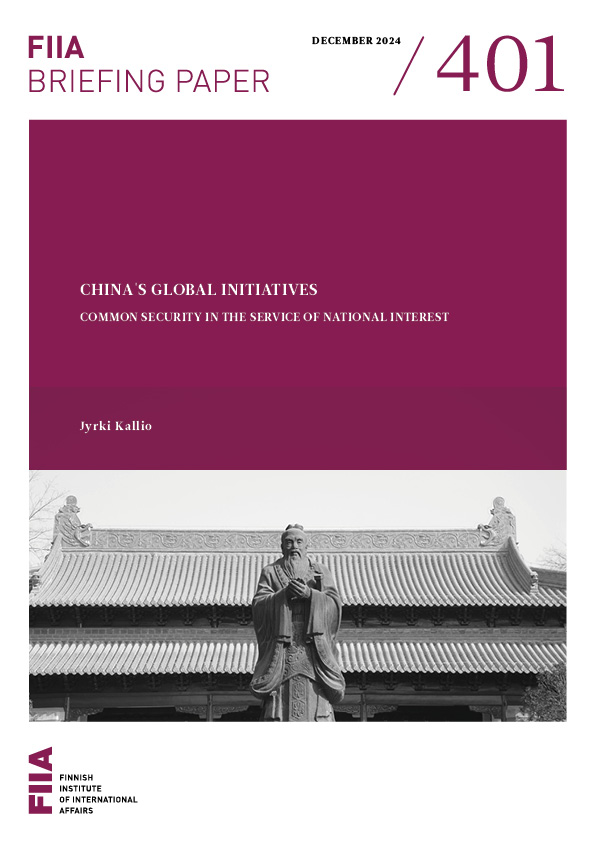
China’s current foreign policy rhetoric emphasizes the desire to build a world truly shared by all in the spirit of peace and cooperation. In reality, China is perceived as an ideational rival or an outright adversary in the West, while in the Global South, its influence is growing.
According to international relations theorist Yan Xuetong, China should adhere to the principle of “moral realism”. In his view, foreign policy based on moral principles is necessary but not sufficient for a state’s leadership to be recognized. Soft power must be supported by a strong economy and military capabilities.
Moral realism builds on the Xunzi, a classic work of Chinese statecraft written over two millennia ago. It stresses righteousness and justness as the most effective ways of winning the hearts of people across borders. At the same time, it recognizes the practical value of realpolitik-based actions.
As US soft power declines, China has an opportunity to strengthen its global leadership. While China’s behaviour currently appears more predictable than that of the US, deep-seated distrust persists. Building soft power, which it still lacks, demands trustworthiness – and trust must be earned.