
Russia’s full-scale invasion of Ukraine in 2022 triggered a historic wave of emigration, reshaping the landscape of Russian political opposition abroad. Thousands of wartime migrants and exiles have sought to contest the Kremlin’s war and authoritarianism through transnational activism. Yet, as this special issue demonstrates, the relationship between exile and activism is deeply ambivalent. Rather than an automatic extension of dissent across borders, activism in exile is marked by complex tensions–between empowerment and despair, hope and burnout, solidarity and disengagement. Drawing on six contributions spanning diverse contexts and methods, the issue develops approaches to grasp the contradictions and a shared analytical framework built on three interrelated themes: ambivalent agency, deservingness, and fragmented solidarities. Together, the articles show how new Russian exile communities in Europe and beyond navigate moral economies of guilt and responsibility, struggle with internal divisions and contested narratives in receiving societies, and confront emotional and material constraints on political engagement. By tracing these dynamics across multiple sites of migrants’ activism, this issue advances broader insights into the possibilities and limits of transnational mobilization against authoritarian regime in times of war.

Transnational activism among Russian wartime migrants: Between empowerment and despair
Post-Soviet Affairs: 1–13. Routledge.

Margarita Zavadskaya
Äldre forskare
Tsypylma Darieva
—
Tatiana Golova
—
Du kan också vara intresserad
FIIA Report
Helsinki Security Forum 2026 report













FIIA Briefing Paper
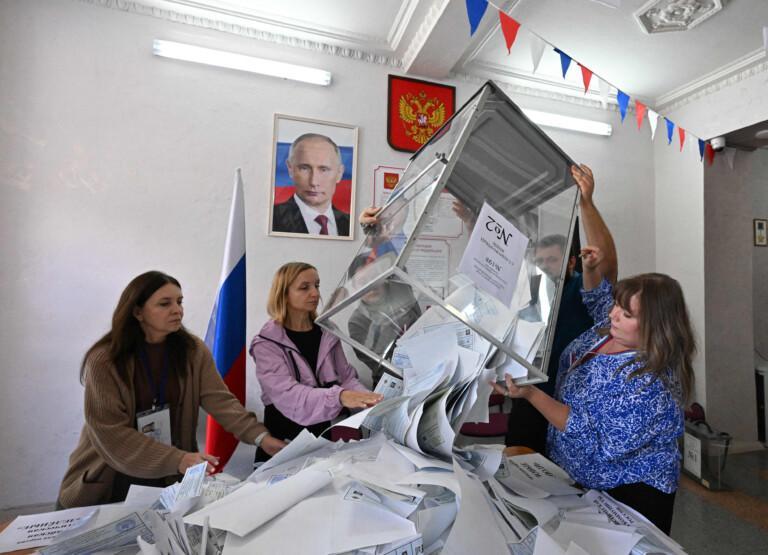
Russia’s new digital authoritarianism: Challenges and leverage for Europe