After the end of the post-Cold War era: A new beginning for transatlantic relations?
The Russian invasion of Ukraine is a historical juncture in international politics. The hot war on the continent shatters the European security order and widens the rift between the authoritarian and democratic world. What does the arrival of the post-post-Cold War order mean for EU-US relations? Will we see a deepening of transatlantic relations, united by the common goal to hold authoritarianism and revisionism at bay? Or will strategic differences between the US and EU resurface, as the former remains structurally oriented toward great power competition with China, while the latter focuses on regional stability and the energy transition?
Puhujat

Nathalie Tocci is Director of the Istituto Affari Internazionali, Honorary Professor at the University of Tübingen and Pierre Keller Visiting Professor at the Harvard Kennedy School. She has been Special Advisor to EU High Representative and Vice President of the Commission Josep Borrell. As Special Advisor to HRVP Federica Mogherini she wrote the European Global Strategy and worked on its implementation. She has been a member of Eni’s Board of Directors since May 2020. Previously she held research positions at the Centre for European Policy Studies, Brussels, the Transatlantic Academy, Washington and the Robert Schuman Centre for Advanced Studies, Florence. Her research interests include European foreign policy, conflict resolution, the Middle East and the Mediterranean. Her major publications include: Framing the EU’s Global Strategy, Springer-Palgrave Macmillan, 2017 (author); The EU, Promoting Regional Integration, and Conflict Resolution, Springer-Palgrave Macmillan, 2017 (co-editor); Turkey and the European Union, Palgrave Macmillan, 2015 (co-author); Multilateralism in the 21st Century, Routledge, 2013 (co-editor), Turkey’s European Future: Behind the Scenes of America’s Influence on EU-Turkey Relations, New York University Press, 2011 (author); and The EU and Conflict Resolution, Routledge, 2007 (author). She is the 2008 winner of the Anna Lindh award for the study of European Foreign Polic

An expert in the history of international relations, Mary Elise Sarotte is the inaugural holder of the Marie-Josée and Henry R. Kravis Distinguished Professorship of Historical Studies. She is also a research associate at Harvard University’s Center for European Studies. Sarotte earned her AB in History and Science at Harvard and her PhD in History at Yale University. She is the author or editor of six books, including The Collapse: The Accidental Opening of the Berlin Wall and 1989: The Struggle to Create Post-Cold War Europe, both of which were selected as Financial Times Books of the Year, among other distinctions and awards. Following graduate school, Sarotte served as a White House Fellow, then joined the faculty of the University of Cambridge, where she received tenure before accepting an offer to return to the United States to teach at USC. Sarotte is a former Humboldt Scholar, a former member of the Institute for Advanced Study in Princeton, and a member of the Council on Foreign Relations. Her most recent book is Not One Inch: America, Russia, and the Making of Post-Cold War Stalemate, on what the fight over NATO expansion did to Western relations with Russia.

Ville Sinkkonen is a Postdoctoral Fellow at the Finnish Institute of International Affairs (FIIA), Center on US Politics and Power. His research focuses on US foreign policy, hegemony, normative power and the politics of trust in international relations. Sinkkonen is the author of ”A Comparative Appraisal of Normative Power” (Brill, 2015) and his work has been published in the Journal of Transatlantic Studies and European Review of International Studies, among others. He holds a doctoral degree (LL.D.) from the University of Turku.
Puheenjohtaja

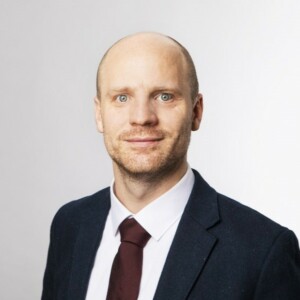
Niklas Helwig on johtava tutkija Ulkopoliittisessa instituutissa ja kansainvälisen politiikan dosentti Tampereen yliopistossa. Hänen tutkimuksensa keskittyy EU:n ulko- ja turvallisuuspolitiikkaan, Saksan ulko- ja turvallisuuspolitiikkaan sekä EU:n ja Yhdysvaltojen suhteisiin. Tällä hetkellä hän on yksi johtavista tutkijoista Suomen Akatemian rahoittamassa hankkeessa Strategisen kulttuurin murros Euroopassa (STRAX).
Helwig on työskennellyt useissa ajatushautomoissa Euroopassa ja Yhdysvalloissa, kuten RAND Corporation Arlingtonissa, Virgianissa, Stiftung Wissenschaft und Politik -säätiössä Berliinissä ja Centre for European Policy Studies -keskuksessa Brysselissä. Hän oli DAAD-stipendiaatti Amerikan Saksan-tutkimuksen instituutissa (AICGS) Washington D.C.:ssä vuonna 2018.
Helwig on julkaissut laajasti vertaisarvioiduissa akateemisissa lehdissä, kuten Journal of Common Market Studies (JCMS) ja Zeitschrift für Politikwissenschaft. Hän on toiminut German Politics- ja European Foreign Affairs Review -lehtien erikoisnumeroiden toimittajana. Hän on kirjoittanut politiikka-analyysejä hallituksille ja voittoa tavoittelemattomille järjestöille, kuten Yhdysvaltain maa- ja ilmavoimille, Suomen ja Saksan hallituksille sekä Konrad Adenauer -säätiölle. Hänen artikkeleitaan ovat julkaisseet muun muassa Die Zeit, Internationale Politik und Gesellschaft, War on the Rocks ja Euractiv.
Helwig suoritti tohtorin tutkinnon Kölnin ja Edinburghin yliopistoissa aiheenaan Euroopan ulko- ja turvallisuuspolitiikan muutos Lissabonin sopimuksen jälkeen. Hänellä on taloustieteen maisterin tutkinto Kölnin yliopistosta.