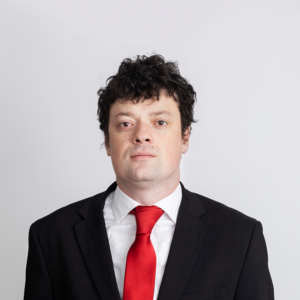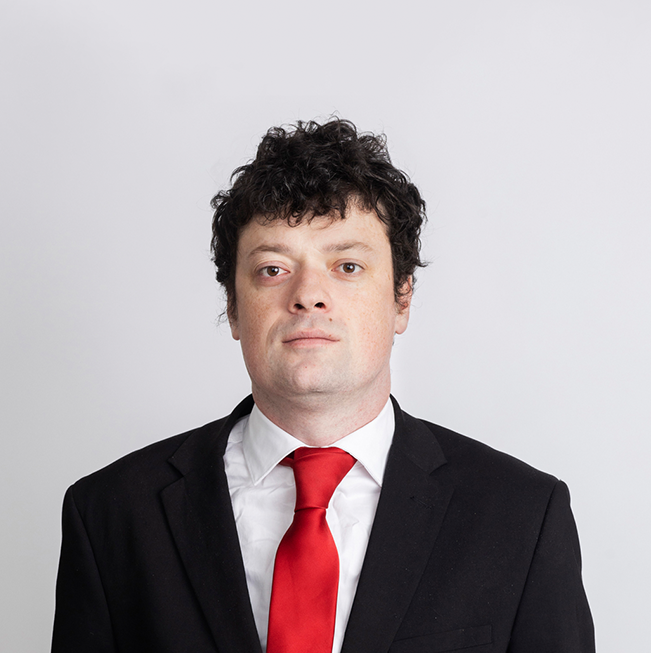
FIIA researcher Eoin Micheál McNamara defended his PhD dissertation in political science at the Johan Skytte Institute of Political Studies, University of Tartu on 9 May 2025. McNamara’s dissertation is entitled “The Risk Society’s Stabilization Failure? An Analysis of NATO and the International Security Assistance Force (ISAF) in Afghanistan” and focuses on the Global War on Terror, specifically NATO’s state-building failure in Afghanistan after the 9/11 attacks.
The dissertation theorizes NATO’s security perceptions through the risk society concept initially proposed by German social theorist Ulrich Beck to capture social characteristics in later modernity. These characteristics can be particularly acute, contradictory and problematic in Western societies, affecting policy options for security organizations like NATO. Stabilization policy is analyzed as a complex combination of combat operations, military operations other than war (MOOTW) and civilian reconstruction.
- “Safety first” anxiety characteristic of the risk society makes NATO governments both repeatedly hesitant and acutely cautious when deciding security policy. Consequently, protection for military forces and civilian relief organizations have become robust, but these protections can then counterproductively obstruct stabilization in the fragile states where these actors are deployed in different ways, McNamara describes.
- In Afghanistan, national military caveats imposed by many “safety first” NATO governments restricted combat exposure but problematically reduced ISAF’s mobility against Taliban insurgents while “bunkerization” inhibited civilian assistance for Afghan populations.
McNamara suspects that similar “safety first” anxiety also underlies the tentative hesitancy displayed by many Western governments when calculating weapons deliveries to support Ukraine at critical stages against Russia’s escalated aggression since 2022.
McNamara suspects that similar “safety first” anxiety also underlies the tentative hesitancy displayed by many Western governments when calculating weapons deliveries to support Ukraine at critical stages against Russia’s escalated aggression since 2022.
- Western societies will continue to demand security against terrorism mobilizing from fragile states or against aggressive powers threatening rules-based order, but these societies are also hesitant to swiftly take strategic opportunities or make sacrifices necessary to strengthen security. Rooted in contemporary risk society, democratic governments find anxious hesitancy difficult to avoid, McNamara says.
McNamara adds that NATO governments can best mitigate this with clear and honest communication explaining why certain actions and sacrifices are necessary for security strategies to retain coherence. In Afghanistan, this coherence was ruefully absent and with damaging consequences for Western power.
An electronic version of the dissertation can be accessed via the DSpace of the University of Tartu Library.
FIIA congratulates on the achievement!