After the Euromaidan Revolution, Ukraine undertook an ambitious transformation project. Yet, the reform implementation lags behind in a number of key areas. With the upcoming presidential and parliamentary election in 2019, Ukraine is at a critical crossroads again.
This event analyses Ukraine’s progress and looks at the key external and domestic drivers of change in Ukraine. Is the reform process sustainable and how can it be improved? The seminar pays special attention to the role of the EU, which has been heavily involved in Ukraine’s institution building since 2014.
In conjunction with the seminar, FIIA will launch a book on EU’s transformative impact abroad entitled ‘EU Induced Institutional Change in Post-Soviet Space: Promoting Reforms in Moldova and Ukraine’ (Routledge, 2018).
Puhujat

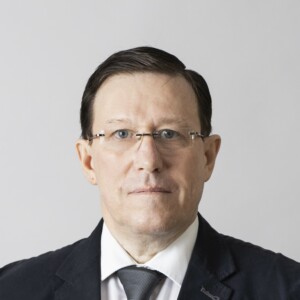
Peter M. Wagner is the Head of the Support Group for Ukraine at the European Commission and Director in the Directorate-General for Neighbourhood and Enlargement Negotiations. Prior to this, he was an adviser at the Commission Task Force on Greece (TFGR) (2011-15), Head of Unit in charge of the defence, aeronautic and maritime industries (2010-11), Head of Unit in the Directorate General for Enterprise and Industry, where his responsibilities included general policy coordination, relations with Member States and the Council, and the Competitiveness and Innovation Framework programme (2005-10). Prior to entering the Commission in 1999, he worked in Germany for a research institute, following several years as a journalist and an editor for a number of newspapers. He holds a Ph.D. in political science, history and psychology from Freiburg University.

Pavlo Sheremeta is the former Minister of Economic Development and Trade of Ukraine (February – September 2014). He has been an Independent Member of the Supervisory Board of Public Joint Stock Company Raiffeisen Bank Aval since 2015. Between 2015 and 2017 Sheremeta founded the School of Public Management of Ukrainian Catholic University in Lviv. Sheremeta has also been President (since 2012) and member of the Advisory Council of Kyiv School of Economics (2014- 2015); President and Senior Fellow of Malaysia Blue Strategy Institute (2008-2012); Founding Dean and Chief Executive Officer of Kiyv-Mohyla Business school (1999-2008); and MBA Program Director of International Institute of Management (1997-1998). He started his career in 1995 as a Project manager of Open Society Institute in Budapest, Hungary. He graduated from Lviv State University (1993) and holds a MBA from Emory University, Atlanta, USA (1995).

Ryhor Nizhnikau is a Senior Research Fellow in the EU’s Eastern Neighborhood and Russia programme at FIIA. He works on the Russian and EU’s policies towards Ukraine, Moldova and Belarus as well as domestic developments in these countries. His current research focus includes the study of the Ukraine’s reforms after the Euromaidan Revolution. He received his PhD from Johan Skytte Institute of Political Studies, University of Tartu. His recent publications include EU Induced Institutional Change in Post-Soviet Space: Promoting Reforms in Moldova and Ukraine (Routledge, 2018).
Puheenjohtaja

Arkady Moshes on Venäjä, EU:n itäinen naapurusto ja Euraasia -tutkimusohjelman ohjelmajohtaja. Hän on myös Euraasian tutkimuksen ja turvallisuuden uusia lähestymistapoja koskevan ohjelman (PONARS Eurasia) jäsen George Washingtonin yliopistossa. Moshesin erityisosaamisalueita ovat Venäjän ulkopolitiikka, Euroopan ja Venäjän suhteet sekä Ukrainan ja Valko-Venäjän sisä- ja ulkopolitiikka. Hän väitteli tohtoriksi kansainvälisten suhteiden historiasta Venäjän tiedeakatemiassa (1992).
Ennen Suomeen asettumista/muuttoa vuonna 2002 Moshes oli työskennellyt Eurooppa-instituutissa Moskovassa vuodesta 1988. Vuosina 2008-2015 hän oli Chatham Housen Venäjän ja Euraasian ohjelman apulaistutkija. Vuodesta 2017 hän on ollut EU-Russia Expert Networkin (EUREN) jäsen. Hän on ollut vierailevana tutkijana Tanskan kansainvälisen tutkimuksen instituutissa (2002) ja Euroopan, Venäjän ja Euraasian tutkimusten instituutissa Elliott School of International Affairsissa, George Washington Universityssa (2016), Public Policy Fellow Woodrow Wilson International Center for Scholarsissa (2007) ja säännöllisenä vierailevana luennoitsijana NATO Defense Collegessa (2005-10, 2013-15) ja Geneven turvallisuuspolitiikan keskuksessa (1998-2022).
Moshes on kirjoittanut lukuisia akateemisia ja analyyttisiä julkaisuja ja hän kommentoi usein mediassa. Moshes oli mukana toimittamassa monografioita ”A Slavic Triangle? Present and Future Relations Between Russia, Ukraine and Belarus” (Swedish National Defense College, 2002), ”Russia as a Network State: What Works in Russia When State Institutions Do Not” (Palgrave Macmillan, 2011), “Russian Policy toward Belarus after 2020 At a Turning Point?” (Lexington Books, 2023) ja artikkeleita muun muassa seuraaville akateemisille julkaisuille: Security Dialogue, International Affairs, Post-Soviet Affairs ja Demokratizatsiya. Hän on myös Ulkopoliittisen instituutin vuoden 2019 raportin ”What Has Remained of the USSR: Exploring the Erosion of the Post-Soviet Space” päätoimittaja yhdessä András Ráczin kanssa.