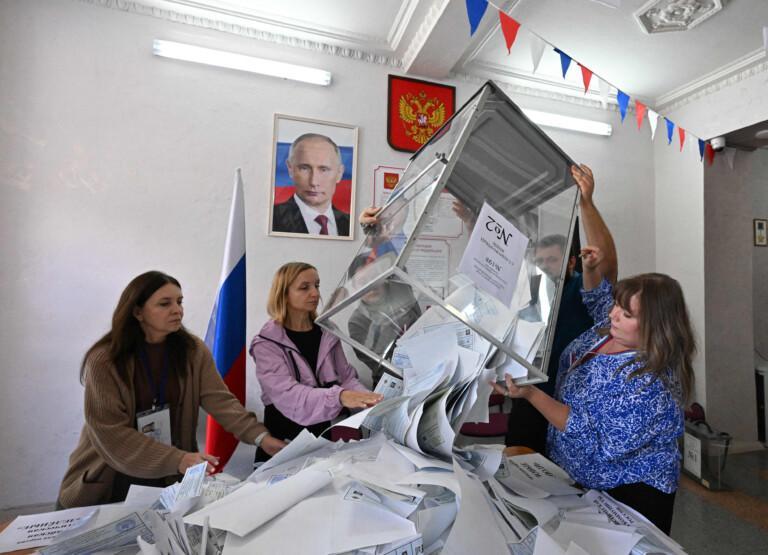
Why do political activists who risked repression under authoritarian rule withdraw from politics after emigrating to democratic contexts? Drawing on 413 in-depth interviews with Russian wartime migrants conducted across 30 host countries, this article examines pathways to political disengagement among wartime émigrés following Russia’s full-scale invasion of Ukraine. We show that emigration does not automatically enable continued political activism, even among previously committed dissenters. We find that resource pressures and logistical challenges alone rarely produce full withdrawal. Rather, disengagement occurs when such pressures are mediated by emotional attrition rooted in pre-migration burnout, disillusionment, and the trauma of war and displacement. Defying expectations, perceived risks of transnational repression shape caution and tactical adaptation do not directly drive demobilization. Chiefly, we identify a distinct normative pathway to disengagement: many Russian migrants frame political activism in exile as ethically questionable, invoking norms of guesthood, non-interference, and contested legitimacy as citizens of an aggressor state.

When transnational activism fails: Pathways to political disengagement among Russian wartime migrants
Post-Soviet affairs: 1–21. Routledge.

Margarita Zavadskaya
Vanhempi tutkija
Mikhail Turchenko
—
Sinua voi kiinnostaa myös
Vertaisarvioidut tieteelliset artikkelit
Fasismi ja äärinationalismi Venäjällä


FIIA Report
Helsinki Security Forum 2026 report