
The significance of several resource-intensive supply chains has been highlighted as societies around the world seek to decarbonize their emissions-intensive sectors. Especially the efforts to modify energy and transport systems are driving a significant increase in global demand for battery minerals such as lithium, nickel and cobalt. Simultaneously, the US–China trade war, COVID-19 and Russian invasion of Ukraine are among some of the recent events that have revealed the vulnerability of complex global supply chains to disruptions. Thus, resilience of supply chains and ‘strategic autonomy’ have gained importance among policymakers. In this paper, we study this emerging governance of resources and of supply chains of green transition through the analytical lens of socio-technical imaginaries. As a case, we focus on the Finnish battery cluster as an application of the European imaginary of strategic autonomy. Based on an interpretive and qualitative analysis of semi-structured interviews and publicly available documents, we investigate what kind of geopolitical and ecological order the imaginary of the battery cluster helps to co-produce. The battery cluster imaginary appears as a continuation of previously studied Finnish transition imaginaries that emphasise national economic benefits over ecological ones, and thus the imaginary does not lend itself to systematic transformation of the energy system. While patents and technologies are becoming central in geopolitical competition, material resources remain important.

Supply chain imaginaries of the green transition: Resource governance in the Finnish battery cluster
Futures, 173.
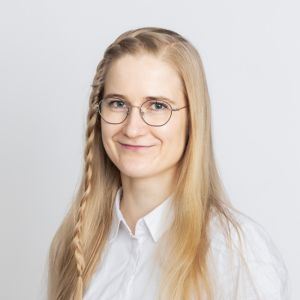
Helmi Räisänen
Tutkijatohtori

Emma Hakala
Johtava tutkija
Jussi Ahokas
—
Roope Kaaronen
—
Mikael A. Manninen
—
Tuuli Parviainen
—
Tero Toivanen
—
Tere Vadén
—
Jussi T. Eronen
—
Sinua voi kiinnostaa myös

FIIA Report
Helsinki Security Forum 2026 report








Ammattiyhteisölle suunnatut julkaisut
European business survey – Bridging the gap between geopolitics and corporate strategy

Cora Jungbluth
Jacob Gunter
Maaike Heijmans